

A bump test can show that a portable gas detector responds to gas, but it doesn’t confirm measurement accuracy. For a portable gas detector service melbourne workplaces can rely on, calibration, functional checks and clear records each have a distinct role in maintaining confidence in an instrument.
It’s understandable to want dependable results without losing detectors to an unclear or disruptive service process. Zenith Sales & Calibrations Pty Ltd provides gas monitor calibration through its Melbourne service facility, with in-house laboratory and on-site calibration capabilities across the business. The right service pathway depends on the instrument and site requirements, while traceable records help support internal procedures and instrument history.
This guide explains what calibration involves, how it differs from a bump test or other functional check, and what to consider when selecting a service for your detector. We’ll also cover the records to retain and practical ways to coordinate calibration in Melbourne, so you can plan instrument servicing with greater clarity and less operational uncertainty.
Key Takeaways
- A reliable portable gas detector service Melbourne plan starts with matching the calibration scope to the detector model, sensor configuration and intended use.
- Understand how calibration differs from a functional check, and why each has a role in maintaining confidence in detector readings.
- Know what to look for in calibration documentation and reference standards to support instrument traceability and workplace procedures.
- Prepare asset identifiers, service history, reported issues and relevant site procedures to help coordinate servicing and manage operational disruption.
- Follow the service sequence from instrument identification and condition assessment through calibration, documentation and return.
Portable gas detector service in Melbourne: what does it include?
A portable gas detector service brings together inspection and calibration activities selected for the instrument and how it’s used. The aim is to maintain confidence in readings used for workplace monitoring and established safety procedures. A detector that doesn’t respond as expected, or whose readings are inaccurate, can undermine decisions made from atmospheric measurements.
For workplaces arranging portable gas detector service melbourne, the service scope should reflect the detector’s sensors, gases measured, condition and operating environment. Single-gas and multi-gas instruments can have different requirements, so a generic check may not address every sensor or measurement function. Manufacturer guidance helps inform the appropriate calibration approach.
A Gas detector overview explains the technology’s purpose and common forms, including portable instruments. Zenith Instruments provides gas monitor calibration from its Melbourne service facility. The Melbourne calibration service page outlines its local calibration services.
Which portable gas detectors may require calibration?
Portable detectors are commonly configured for a single target gas or for multiple gases. Depending on the instrument, examples of monitored gases include methane, oxygen, carbon monoxide and hydrogen sulfide. These examples don’t mean every detector measures each gas: sensor arrangement and instrument design determine what it can detect. Calibration requirements should follow the manufacturer’s guidance and suit the specific configuration and application.
Calibration, bump testing, and functional checks: what is the difference?
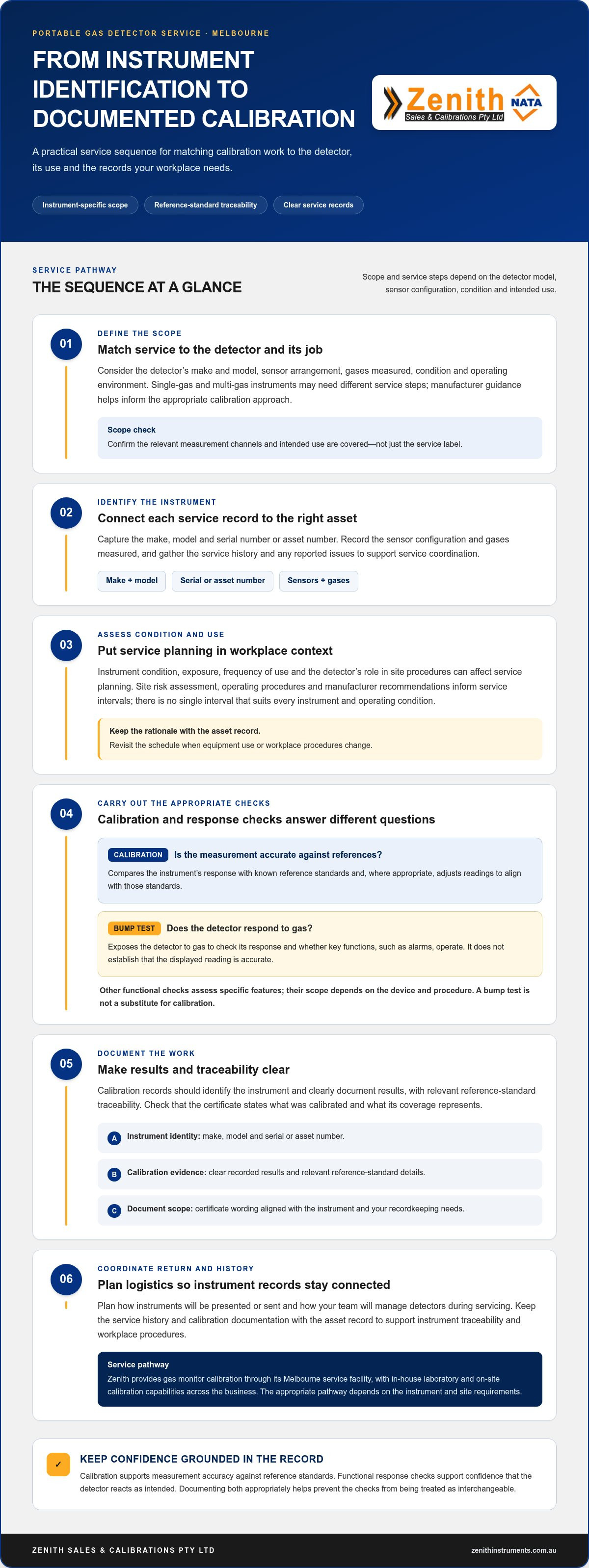
Calibration compares an instrument’s response with known reference standards and, where appropriate, adjusts it so its readings align with those standards. A bump test exposes the detector to gas to check that it responds and that key functions, such as alarms, operate. Other functional checks may assess specific instrument features, but their scope depends on the device and procedure.
Calibration assesses measurement accuracy against reference standards; a functional response check shows whether the detector reacts to gas. A bump test is not a substitute for calibration: it can indicate that a sensor responds without establishing that the displayed reading is accurate. Treating the checks as interchangeable can leave an important gap in the instrument’s service record and monitoring process.
How Melbourne workplaces can evaluate a gas detector calibration service
A useful evaluation starts with fit: the calibration scope needs to match the detector model, its sensor arrangement and the conditions in which it’s used. A single-gas instrument and a multi-gas monitor may require different service steps. The gases measured, instrument condition and manufacturer recommendations also shape the work. For a portable gas detector service melbourne plan, review the technical scope alongside the records and logistics, not just the service label.
- Instrument scope: Identify the make, model, sensors and gases measured. Confirm the calibration covers the instrument’s relevant measurement channels and intended use.
- Reference standards: Understand what reference standards support the calibration and how their traceability is documented.
- Documentation: Look for clear instrument identification, recorded results and relevant reference-standard details. Check that certificate wording and scope align with your internal recordkeeping needs.
- Service logistics: Plan how instruments will be presented or sent, how asset records will be maintained, and how your team will manage detectors while they’re being serviced.
Zenith Instruments provides gas monitor calibration in Melbourne. Our gas detector calibration service is a useful starting point for understanding the service in relation to your instrument and calibration requirements.
What should calibration records make clear?
Instrument identification, such as the make, model and serial or asset number, connects the record to the specific detector serviced. Results should be documented clearly, with relevant reference-standard traceability recorded so the calibration can be followed through your instrument history. Certificate endorsement and scope depend on the service and instrument; check that the document states what was calibrated and what its coverage represents before relying on it for a particular internal or external requirement.
How do workplace procedures and detector use affect service needs?
Set service intervals through your site risk assessment, operating procedures and the manufacturer’s recommendations. WorkSafe Victoria and Safe Work Australia guidance may inform workplace safety practices, but there isn’t one interval that suits every industry, detector or operating condition. Exposure, frequency of use and the role of the instrument in site procedures can all affect planning. Keep the rationale and service history with the asset record, and revisit the schedule when equipment use or procedures change.
To organise the next step, gather your detector details and documentation, then review Zenith’s calibration service information as part of your service planning.
What happens during portable gas detector calibration and service?
A structured service follows the instrument from identification through assessment, calibration, documentation and return. That sequence helps keep the work connected to the detector’s actual configuration and gives the workplace information to update its equipment records. The exact procedure varies with detector design, installed sensors, service scope and the manufacturer’s instructions.
From instrument identification to calibration
Before service, record the detector’s make, model, serial or asset number, sensor configuration and any reported faults. These details help define which measurement channels are in scope and provide context for the assessment. A fault report can also flag an issue that needs attention beyond routine calibration.
The instrument is assessed, then calibrated against suitable reference standards using a process appropriate to its design and service scope. Specific methods and acceptance criteria depend on the detector and manufacturer guidance, so they shouldn’t be assumed to be identical across different models. Zenith Instruments provides gas monitor calibration through its Melbourne facility, with in-house laboratory and on-site calibration capabilities across the business. The appropriate pathway depends on the instrument and site requirements.
Results, certificates, and return-to-service records
After calibration, results are documented and linked to the instrument’s identifying details. The record can help a workplace maintain its equipment history, review service outcomes and support internal quality procedures. Certificate content and endorsement can vary by service scope, so the document should be read for what it actually records rather than treated as a general statement covering every detector function.
A traceable calibration record connects the identified instrument to its recorded results and the reference standards used. This makes accurate asset details important: a certificate that can’t be matched confidently to a detector is harder to use in equipment records.
Return-to-service decisions remain with the responsible workplace. Teams should review the service documentation alongside site procedures and any actions arising from the results before putting a detector back into operational use. For a detector requiring further attention, follow the workplace’s established process rather than assuming calibration alone resolves every reported issue.
Zenith’s gas detector calibration service provides service-specific context for planning an instrument’s calibration. To discuss a practical calibration pathway in Melbourne, explore Zenith Instruments’ calibration services with the detector’s model, sensor details and service history at hand.
How to plan portable gas detector servicing in Melbourne with minimal disruption
Good service coordination starts before a detector leaves the site. A clear handover helps match each instrument to the required work, while advance planning lets teams manage detector availability within their own safety systems. For portable gas detector service melbourne, organise instruments by asset and service needs rather than treating a mixed fleet as one identical batch.
Prepare detectors and records before service
Assemble a handover record for each detector. Include its asset ID, make and model, serial number, sensor details, calibration history and any reported symptoms. Manufacturer instructions and relevant site procedures can add useful context. Follow your organisation’s safe handling and transport procedures when preparing equipment for collection or presentation.
- Match each detector to its asset record and service history.
- List sensor configuration and gases monitored, where known.
- Describe faults or unusual behaviour, including when they occur.
- Include applicable manufacturer guidance and site requirements.
These details reduce avoidable back-and-forth and help ensure that the service request reflects the instruments actually being handed over.
Coordinate service around Melbourne operations
Set a planned service window that accounts for the number of detectors, their operational roles and the time your team needs to arrange suitable alternatives. Within your safety system, identify how work will be managed while instruments are unavailable. Keep the equipment count accurate and group detectors by model or service requirement where practical.
Laboratory and on-site calibration are different service pathways. The suitable option depends on the instrument, work scope and job requirements, so don’t assume either method fits every detector or site. Share scheduling information and any site constraints when arranging the work. Service coordination can then be aligned with the project and instrument requirements, without relying on an assumed turnaround time.
Zenith Instruments has a Melbourne service facility and provides gas monitor calibration. Explore calibration services in Melbourne for the local service pathway. Keep the handover details together, especially when coordinating multiple detectors or planning servicing around site operations.
Ready to plan calibration for your instruments? Review Zenith Instruments’ calibration services and prepare your detector details, service history and scheduling needs.
Arrange portable gas detector calibration service with Zenith in Melbourne
Zenith Instruments provides gas monitor calibration from its Melbourne service facility, supporting workplaces that need a considered approach to instrument servicing and records. The service pathway is shaped around the detector, its configuration and the work required. Learn more about the gas detector calibration service and the information that helps define a suitable scope.
What information helps scope a detector service?
For a useful service discussion, bring together the details that identify the detector and explain its role on site. This helps connect the instrument to its history and gives the service team practical context for planning.
- Make, model, serial number and internal asset ID.
- Sensor configuration and gases measured, if known.
- Previous calibration records and relevant manufacturer instructions.
- Reported faults, unusual readings or other symptoms.
- Application, operating environment and preferred service coordination.
For example, include whether the detector is used for routine workplace monitoring or as part of a specific site procedure. Explain any scheduling constraints or the number of instruments involved, too. These details help scope the work and coordinate the service pathway around operational requirements.
What to expect from a technically focused service partner
Calibration should be supported by a defined process, suitable reference standards and clear communication about the work performed and results recorded. Review the service documentation against your asset details and internal recordkeeping needs. Certificate scope and endorsement should be judged from the certificate itself and the specific instrument service, rather than assumed from general statements about calibration capability.
Zenith’s Melbourne presence provides a local point for service coordination, while its broader Australian coverage supports organisations managing instrumentation across locations. In-house laboratory and on-site calibration capabilities are available across the business; the appropriate pathway depends on the detector and job requirements. This allows planning to account for instrument details and operational needs without relying on a one-size-fits-all arrangement.
If you’re arranging a portable gas detector service melbourne programme, prepare the detector identifiers, service history and site requirements before making an enquiry. This gives the discussion a clear technical starting point and helps align the next steps with your workplace procedures.
Arrange a detector calibration discussion through the Zenith Instruments website, with your instrument details and preferred service coordination ready.
Plan your detector calibration with confidence
Reliable portable gas detector servicing starts with a calibration scope suited to the instrument, its sensors and its workplace use. Calibration is distinct from a bump test or functional check, so plan for each activity according to your procedures and manufacturer guidance. Keep asset identifiers, service history and reported issues together to support traceable records and practical service coordination.
For portable gas detector service melbourne, Zenith Instruments provides gas monitor calibration through its Melbourne service facility. In-house laboratory and on-site calibration capabilities are available across the business, with the appropriate pathway shaped by instrument and project requirements. Clear detector details help make the service discussion more focused and support planning around operational needs.
Take the next step with your instrument information and service requirements ready. Arrange a portable gas detector calibration discussion with Zenith Instruments and move forward with a practical plan for your workplace.
Frequently Asked Questions
What does portable gas detector calibration involve?
Portable gas detector calibration compares the instrument’s readings with known reference standards and may include adjustment where required by the service procedure. The technician identifies the detector and its sensor configuration, assesses its condition, then carries out calibration appropriate to the instrument and manufacturer guidance. Results are documented against the instrument details. The exact scope varies by model, sensors and gases measured, so clear asset information helps define the work.
How often should portable gas detectors be calibrated in Australia?
Set calibration intervals using the manufacturer’s recommendations, your workplace procedures and the detector’s operating conditions. Published service guidance commonly recommends calibration every 30 to 90 days, with six months as a maximum interval, but this isn’t a universal statutory interval for every instrument or workplace. Consider how the detector is used and the consequences of inaccurate readings. A bump test before use is a separate response check, not a replacement for calibration.
Is a bump test the same as gas detector calibration?
No. A bump test checks that a detector responds to gas and that functions such as alarms operate; it doesn’t establish measurement accuracy. Calibration compares readings with known reference standards and may involve adjustment. Both checks serve distinct purposes, and one shouldn’t be treated as a substitute for the other. Follow your manufacturer instructions and workplace procedures to determine which checks are required for the instrument and its application.
Can portable gas detectors be calibrated on site in Melbourne?
On-site calibration may suit some instruments and jobs, while other work may be better handled through a laboratory pathway. Suitability depends on the detector, its sensor configuration, service scope and site requirements. Zenith Instruments has a Melbourne service facility and provides in-house laboratory and on-site calibration capabilities across the business. Share your instrument details and site constraints when arranging service so the pathway can be planned around the work.
What information should I provide when arranging gas detector service?
Provide the detector’s make, model, serial number or asset ID, sensor details and gases measured where known. Include its service history, relevant manufacturer instructions and any reported faults, unusual readings or alarm issues. Describe the detector’s application and operating environment, along with the number of instruments and your preferred service coordination. These details help scope the work and plan handover with less uncertainty for Melbourne operations.
What should a portable gas detector calibration certificate include?
A useful certificate should identify the instrument clearly, record the calibration results and state the service scope. It should also provide relevant information about the reference standards and their traceability, where applicable. Review the certificate against your asset records so it can be linked to the correct detector. Endorsement and certificate scope depend on the specific service and instrument; don’t assume a certificate covers work beyond what it states.
Can a detector be used after it fails calibration?
Don’t return a detector to operational use simply because it has been assessed or adjusted. If it fails calibration, follow your organisation’s procedures for removing or restricting the instrument, assessing the reported result and arranging any required corrective work. The responsible workplace should review the service record and determine return to service under its safety system. Keep the failure and follow-up actions linked to the detector’s asset history.